
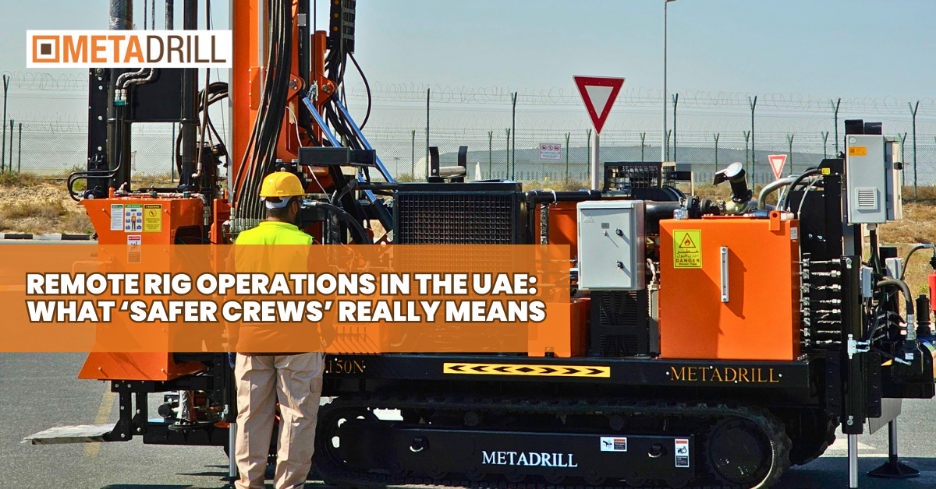
Remote operations sound like a simple upgrade: add screens, add sensors, move the operator back. In reality, “safer crews” only happens when the whole job is redesigned around risk control, not convenience. In the UAE, where heat, dust, tight project schedules, and high HSE expectations collide, remote setups can reduce exposure to pinch points, rotating parts, and line of fire hazards if they are planned properly. That is the real shift in geotechnical drilling: fewer people near moving energy, and more control built into the system.
Why “remote” is not the same as “safer” in geotechnical drilling
A remote station does not automatically remove risk. It changes where the risk sits. Instead of hands near rods and clamps, the main risks become visibility gaps, communication errors, and unsafe workarounds when the process does not fit the site reality.
A safer remote setup usually delivers three outcomes:
- Less time spent inside exclusion zones
- More consistent, repeatable operating steps
- Faster stop response when something looks wrong
If any of these are missing, the site may feel modern, but it is not truly safer.
The role of geotechnical drilling equipment in reducing line of fire exposure
Safety improvements come from reducing human contact with moving or pressurized systems. This is where the right geotechnical drilling equipment matters more than slogans.
Features and practices that typically cut exposure:
- Automated or assisted rod handling that reduces manual lifting and pinch point work
- Interlocks that prevent motion unless guards and doors are correctly positioned
- Clear emergency stop access at the rig and at the remote station
- Cameras placed to show hands, clamps, rotation zones, and the ground around the rig
Remote operations work best when the equipment design supports “hands off” behavior, instead of forcing the crew to step back in for every small adjustment.
Geotechnical drilling rig layout: zones, sightlines, and simple rules
Remote control is only safe if the work area is controlled. A well planned Geotechnical drilling rig layout uses physical space to prevent mistakes.
A practical zoning approach:
- Mark an exclusion zone around rotation, feed, and rod handling areas
- Set a single entry point with permission rules, not casual access
- Keep helpers positioned where they can be seen by the operator on camera
- Use standard hand signals or radio calls for start, stop, and hold
This is not about adding paperwork. It is about making the safe choice the easy choice.
What modern efficient geotechnical rigs change for crews
The biggest benefit of modern efficient geotechnical rigs is consistency. When the rig can maintain stable parameters and the operator has good feedback, the job becomes less reactive.
Common improvements crews notice:
- Smoother control of feed and rotation, which reduces sudden movements
- Better monitoring of pressure and torque trends, helping catch issues early
- More predictable rod handling and clamping behavior
- Less need for improvisation, which is where accidents often start
In short, modern systems remove the “surprise moments” that push teams into risky shortcuts.
Remote operations checklist you can apply before the next shift
Use this as a quick pre start routine:
- Confirm camera views cover the clamp area, rod line, and ground near the rig
- Test emergency stops at the rig and at the remote station
- Verify communication method and a clear stop word everyone uses
- Check barriers, signage, and entry control to the exclusion zone
- Run a short dry test of the workflow before full speed drilling
These are simple steps, but they prevent the common failure mode: a remote setup that works only when everything goes perfectly.
Conclusion
In the UAE, remote operations become meaningful when they reduce exposure, improve visibility, and enforce disciplined workflows. When geotechnical drilling is planned around controlled zones, reliable communication, and repeatable steps, crews spend less time in harm’s way. The biggest gains come when the Geotechnical drilling rig and the operating routine are designed together, so safety is built into how the job runs, not added after.