
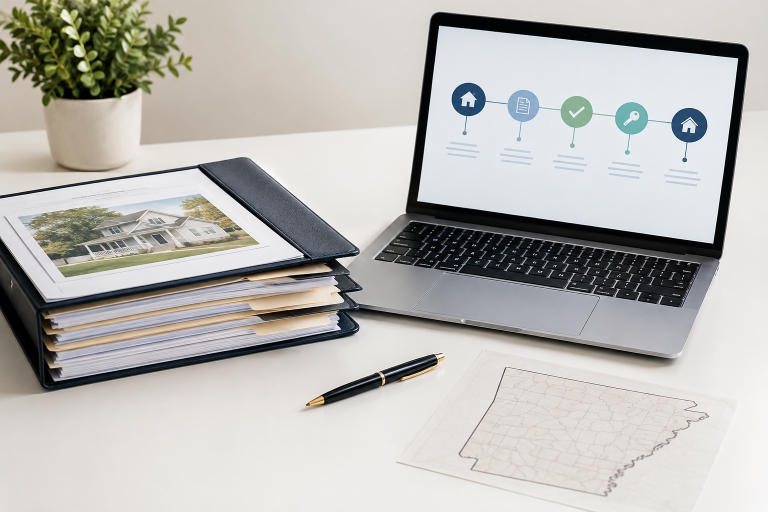
Key Takeaways
- Begin each file with the fully executed contract and every related document.
- Convert contractual dates into a shared timeline, with one owner per task.
- Use concise, scheduled communication to reduce uncertainty for buyers and sellers.
- Plan ahead for inspections, appraisals, title questions, repairs, and closing logistics.
- Complete a final file review before and after closing.
From Northwest Arkansas relocations to rural land purchases in the Delta, a signed offer is only the beginning of an Arkansas real estate transaction. A reliable transaction coordinator in Arkansas workflow helps agents and teams turn contract terms into visible tasks, clear updates, and an organized path to closing.
The goal is not to make every transaction look identical. It is to create a repeatable structure that provides the team with a dependable starting point while leaving room for the property, financing, client needs, and negotiated contract terms.
Why a Workflow Matters in Arkansas
A transaction involves more than an offer and a closing appointment. It can include lender requests, earnest money, inspections, repair negotiations, title work, disclosures, amendments, appraisals, walkthroughs, and possession details. When these moving pieces live only in scattered email threads or someone’s memory, small omissions can become stressful problems.
A documented process provides everyone with a shared view of what has happened, what is due next, and who needs to act. Teams looking for practical ways to organize that work can use TransactionCoordinator.com as part of their broader search for contract-to-close support and transaction systems.
Start With a Complete Contract File
The strongest workflow begins immediately after all parties have signed. Before scheduling the next step, review the file for completeness. A file should allow a broker, coordinator, or team member to understand the deal without having to reconstruct its history from text messages.
Contract-Start Checklist
- Save the fully executed purchase agreement in the approved file location.
- Collect addenda, disclosures, notices, amendments, and any counteroffers.
- Confirm the legal names, email addresses, and phone numbers for all parties.
- Record acceptance, closing, and possession dates exactly as written.
- Identify the lender, title company, inspectors, appraiser, and cooperating professionals.
- Confirm the brokerage’s preferred document-storage and communication procedures.
File organization is not merely administrative housekeeping. It supports accurate follow-up and makes it easier to identify when a document, signature, or deadline is still outstanding.
Build the Transaction Timeline
Next, translate the contract into a working calendar. Use one master timeline that identifies the task, contractual deadline, assigned owner, current status, and next action. Avoid vague labels such as “inspection pending.” Instead, note the inspection date, the report delivery target, the response deadline, and the person responsible for follow-up.
Milestones Worth Tracking
- Earnest money delivery and receipt confirmation
- Loan application milestones and lender document requests
- Inspection, repair-response, and amendment deadlines
- Appraisal order, appointment, report, and lender response
- Title search questions, surveys, and property research when needed
- Final loan approval, walkthrough, signing, and key transfer
Add internal reminders before each contractual date. An early reminder creates time to contact the appropriate party, clarify a question, or seek broker guidance before a deadline becomes urgent.
Create a Simple Communication Plan
Clients do not need every internal detail, but they do need timely, understandable updates. A predictable communication rhythm also reduces duplicate messages between agents, lenders, title professionals, and clients.
After acceptance, send a transaction-start message that explains the next few milestones in plain language. Then provide updates when a major item is completed, delayed, or requires a decision. A useful update explains what happened, what comes next, who owns the next step, and whether the closing date is currently affected.
For example, instead of saying that an appraisal is pending, explain that it has been ordered, identify the anticipated next update, and avoid making promises about value or lender approval.
Plan for Arkansas-Specific Details
Arkansas teams may handle downtown condominium transactions, subdivision homes, lake properties, acreage, farms, and homes in smaller communities where service providers travel farther. Rural transactions can raise additional questions about access, boundaries, wells, septic systems, surveys, or land use. New construction can bring builder schedules and completion items that require close attention.
Weather, travel distance, contractor availability, and local office schedules can also affect practical timing. Teams should confirm current contract requirements and brokerage procedures rather than relying on an outdated checklist. Reviewing current state guidance for licensees can help professionals keep their internal processes aligned with their supervisory responsibilities.
Track Inspections, Repairs, and Appraisals
The middle of a transaction often has the most movement. Confirm inspection access, collect reports promptly, and distinguish between general observations and formal repair requests. If the parties reach an agreement, make sure the agreed-upon terms are documented through the appropriate written process.
For repairs, track who is arranging the work, what evidence of completion is needed, and whether a reinspection or final confirmation is required. For appraisals, follow the order date, property visit, report delivery, lender response, and any resulting contract discussion. Keep communications factual and avoid predicting an appraisal result.
Keep Title and Closing Details Moving
Title and closing preparation should begin early, not during the final week. Confirm the title company contact, earnest money status, payoff needs, signer availability, and any requests for estate, ownership, or legal-description documents. If a question appears, identify the responsible party and document the follow-up.
Questions to Settle Before Closing Week
- Are the required documents and lender conditions complete?
- Have signing arrangements and the closing location been confirmed?
- Does each party understand possession and key-transfer timing?
- Are repair, utility, and final walkthrough details addressed?
Complete a Pre-Closing and Post-Closing Review
Before closing, compare the latest contract and amendments against the transaction timeline. Confirm the walkthrough, signing details, outstanding conditions, and client reminders about identification, funds, or documents. After closing, save the final signed records, note unresolved follow-up items, and ensure the brokerage file is complete.
A consistent contract-to-close workflow gives Arkansas real estate teams a calmer way to manage complex work. Complete files, visible deadlines, clear ownership, and practical updates can help protect the client experience from the accepted offer through the closing table.